
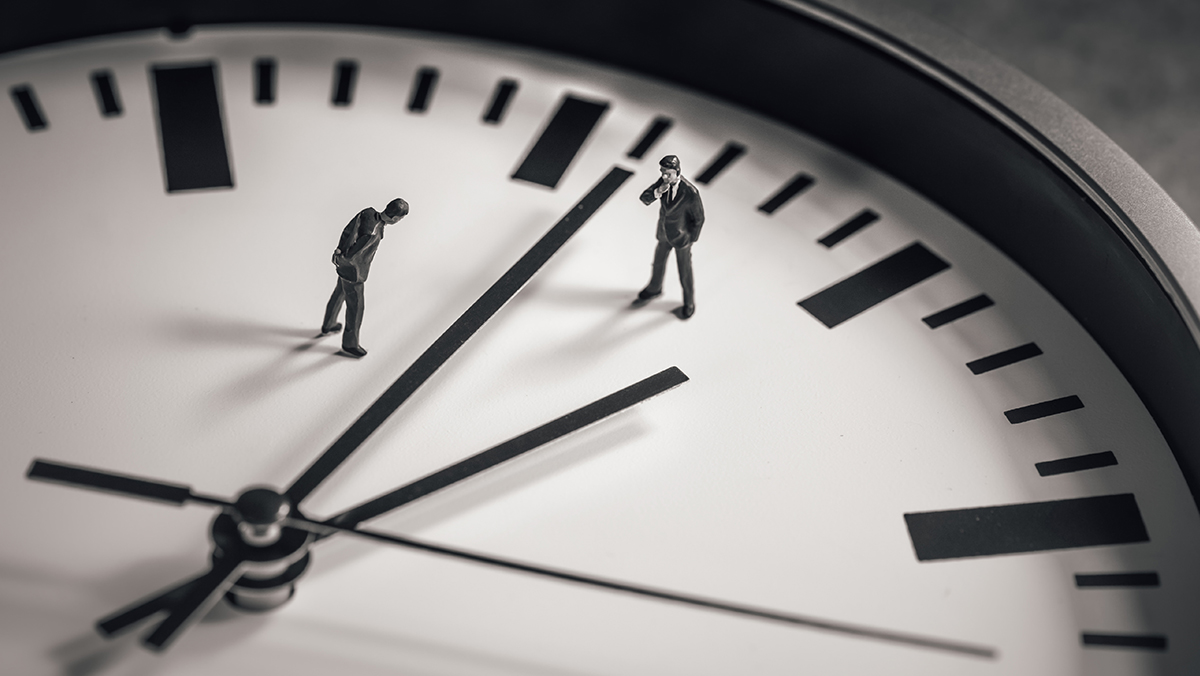
Throughout my career, I realized that every second conversation—be it in a boardroom, steering committee, town hall, or quiet and honest corridor encounter—somehow comes back to the same question. The context may change, but the tension does not: How do we deliver the performance our brand needs right now, while building the enduring value that it will rely on for years to come?
Most leaders already understand the importance of brand. They’ve seen the evidence. They recognize the upside of building meaning, trust, and salience over time. Yet they operate in systems built for immediacy. Quarterly reviews, compressed cycles, and real-time dashboards pull attention toward what moves quickly.
Even the most visionary leaders feel the gravitational pull of the present.
This tension isn’t cultural. It’s structural. Targets tighten. Timelines shrink. Decisions compress. Leaders know long term matters but struggle to keep it in focus when they’re rewarded for the next four weeks rather than the next four years. The closer we get to the surface of the present, the harder it becomes to protect the future.
So, the question keeps returning. Why is it so difficult for organizations that believe in long-term brand strength to behave in ways that build it? Why does the immediate demand so much attention when the enduring delivers so much value?
Hugh Johnston, Vice Chair and CFO of PepsiCo, captured the paradox simply: “Any idiot can do the short term. Any idiot can do the long term. The trick is to do both.”
The performance clock
Every brand runs on a clock that moves quickly. It tracks how the brand is currently performing amidst shifts in consideration, search, conversion, and other signals of momentum. This clock is shaped by trading cycles, competitive activity, and the brand’s ability to respond in the moment. But it’s not the enemy. It keeps brands visible when markets move fast, and it helps them respond to category shifts with relevance and speed. In categories where people switch easily or buy on impulse, this clock is essential.
The performance clock also rewards immediacy. Tactical campaigns, performance pushes, and conversion-led activity show results almost instantly. The Institute of Practitioners in Advertising (IPA), home to the world’s largest effectiveness database, shows the same pattern across decades of cases. Short-horizon activity lifts numbers quickly and creates visible spikes.
The challenge is not that the performance clock exists. It’s how easily it dominates. When pressure rises, leaders lean toward what responds quickly. When targets tighten, budgets shift to what can be measured in days. Slowly, the brand is optimized for this week rather than the next decade.
The performance clock answers, how are we performing now? But it leaves another question wide open: What are we building that strengthens resilience, distinctiveness, and pricing power for the long run?
The value clock
Brands simultaneously run on a second clock—one that moves more slowly. This clock measures the accumulation of meaning, trust, and relevance and the subsequent creation of long-term advantage. It’s built through communication, experience, innovation, product, design, service, and culture. These are the deeper shifts that make a brand easier to choose and harder to ignore.
This is the value clock. Kantar’s BrandZ work shows that brands investing consistently in these drivers outperform major market indices with stronger margins, lower price sensitivity, and more durable preference.
Value builds gradually but reshapes economics as it grows. As meaning strengthens, media works harder, acquisition becomes cheaper, and product launches gain traction faster. IPA analysis shows the same pattern. Brands with strong long-term foundations achieve higher profit growth and more efficient short-term performance.
The value clock doesn’t deny the present. It expands it. Instead of asking, how are we doing today, it asks, what advantage are we creating that will still matter years from now?
Why the clocks fall out of sync
If both clocks matter, why do they drift apart? The reason is structural. Short-term signals are loud and frequent. Long-term signals are quiet and slow. Performance metrics refresh daily. Value metrics move in quarters and years. And, like it or not, teams naturally optimize for what is visible.
Leadership cycles also widen the gap. Studies from both Harvard Business Review and McKinsey show that chief marketing officers often remain in their roles for only three to four years, while long-term brand effects take five to seven.
Leaders feel pressure to show results within their own cycle, not the brand’s. Misalignment is rarely intentional—it’s simply the path of least resistance.
The economics of alignment
When the two clocks move together in sync, the economics of brand building change. Short-term activity becomes more efficient because long-term meaning has already done part of the work. Distinctiveness, relevance, and trust reduce acquisition costs. Media spend travels further. Customers respond faster.
When performance and value work together, the effect is not additive but exponential.
Les Binet and Peter Field suggest a simple rule: For the strongest business effects, roughly 60% of investment should support long-term brand building, while 40% should go toward short-term activation for the strongest business effects. WARC’s Multiplier Effect shows that brands combining the two see up to three times the effectiveness of siloed tactics. IPA evidence confirms that campaigns anchored in long-term brand investment deliver the highest profit growth.
How can leaders synchronize the clocks?
Synchronizing the clocks isn’t about balance. It’s about shared strategy.
It starts with a shared horizon where teams work to one definition of success across weeks, quarters, and years. It continues with a shared scoreboard where brand and performance metrics work together rather than sitting in competing decks.
Then comes protection. Brands that build enduring value ringfence the ideas, experiences, and innovations that create future advantage, even when short-term pressure rises. Research from McKinsey and Bain shows that organizations sustaining long-term investment outperform their peers because they resist reactive cuts when uncertainty appears.
When this shared strategy is in place, the clocks stop competing. One creates momentum; the other gives that momentum direction.
What happens when the clocks work together?
Some of the clearest examples come from brands that grow with consistency, not noise.
LEGO is one of them. For decades, it has invested in a long-term idea rooted in creativity and open-ended play. This meaning shows up everywhere: in product design, stores, global partnerships, digital worlds, and the LEGO Masters franchise. That is the value clock.
Alongside LEGO’s value clock sits sharp performance activities such as seasonal launches, limited editions, movie tie-ins, and retail events. These spikes work because the long-term meaning carries them. The value clock strengthens the performance clock by giving every activation relevance and momentum.
Saudi Telecom Company (known as stc) offers a regional parallel. Its shift from telecom provider to digital enabler was a multiyear reframing of experience, service, and ambition across the organization. That long-term direction now powers short-term pushes in fintech, gaming, entertainment, cloud, and new ventures. Each tactical move strengthens the same story. The value clock accelerates the performance clock by making every initiative more credible and coherent.
What the two clocks ask of us
Here is what the clocks demand from those of us shaping brands.
- If you’re a CEO: Unify the organization behind one shared brand and performance dashboard.
- If you’re a CMO: Make long-term brand building your strongest performance investment.
- If you’re a CFO: View brand budgets as assets that grow future value.
The greatest advantage doesn’t belong to brands that choose one clock over the other. It belongs to those that learn to make them tick as one. Because in the end, it’s never performance or value.
It’s performance multiplied by value, working over time.
Cover image: Kirill_makarov